The tool we always wanted.
So we built it.
Quevell is built from six years inside heavyweight trackers: running real projects, administering them, and keeping a list of everything that slowed the work down, got in the way, or made it harder than it had to be.
Quevell is the tool without that list.
Principles
Opinions we hold, written into the product
Every one of these principles came from years of practice, not from marketing.
Fast is a feature
A tracker is opened dozens of times a day, so speed is part of the product rather than an optimisation for later. Screens render at once, lists answer at once.
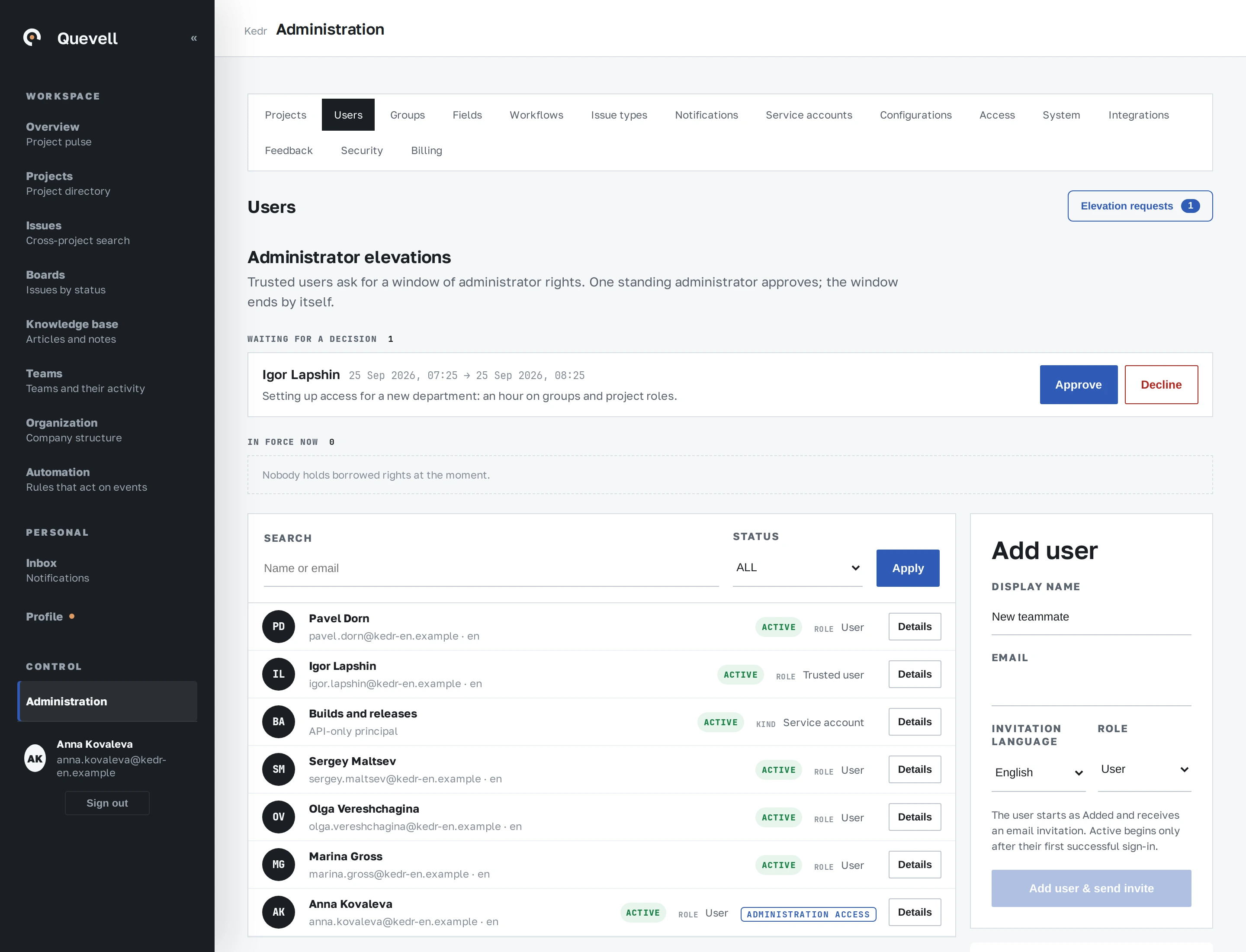
Administration is borrowed, not held
The request, the approval and the window are built into the product rather than living in a chat with an admin. Elevated rights are granted for a time and are removed automatically, and the question "why does this user still have full access" stops arising on its own.
Your data is actually yours
A complete export in open formats is available at any moment: an ordinary feature rather than a negotiation with support. For backups, for your own reporting, or for peace of mind, everything you have put in stays available to you.
The work
Built and working today
Not a roadmap, the part you can touch. Every card below is covered by tests, not by intentions.
The foundation
Workflows with a memory
Edit a live workflow safely: every publication is an immutable revision with an author and a time. Restoring an earlier version is a new publication, reviewed like any other, and never a quiet rewrite of the record.
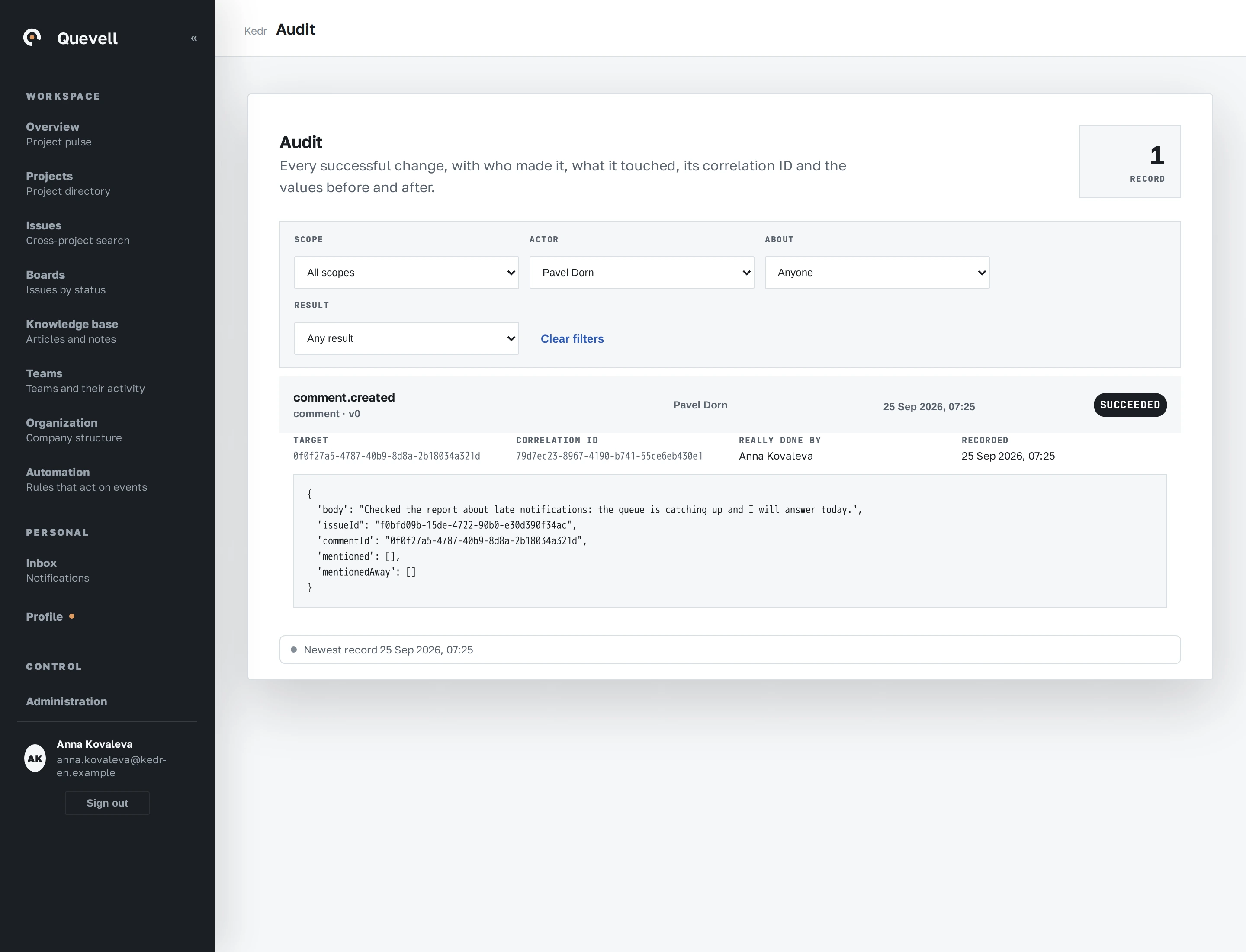
Every change on the record
Who, what, and the values before and after, recorded at the core data layer rather than bolted on afterwards. When somebody asks who moved this and what changed, the answer is one query away.
A query language, not a search box
QQL: typed fields, =, in, ~, AND, ORDER BY. The syntax is one you already know. A query binds to stable identifiers, so renaming a field or a status never breaks it.
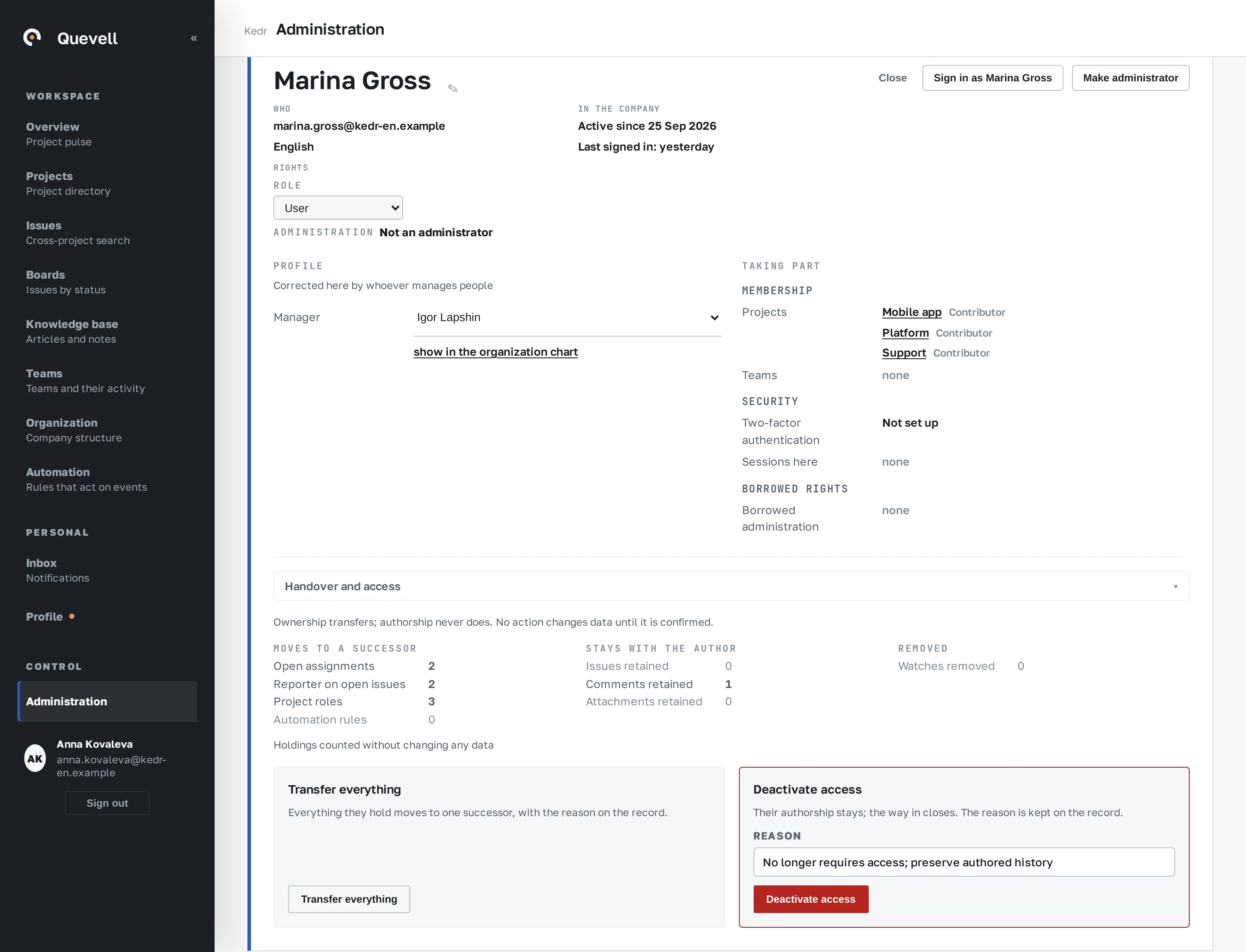
Your data answers to you
Before a user is deactivated you see everything that deactivation will touch, and their issues are handed over to a new owner. No issue is left without one.
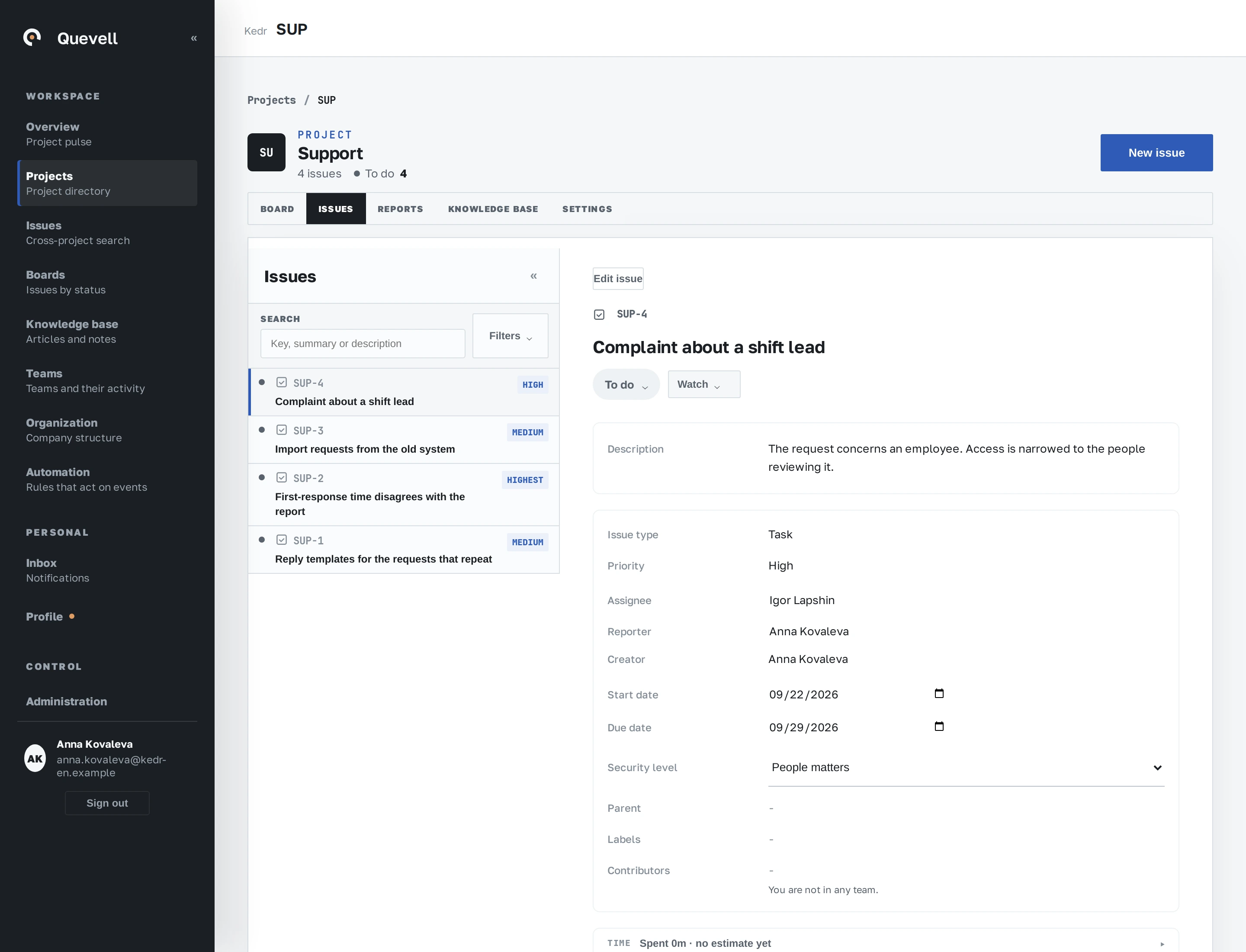
Visibility that narrows, never widens
HR, payroll and incident issues do not need a separate locked project: access narrows to a single issue while the rest of the project keeps working. Issue-level security only ever narrows project permissions, never widens them, so no mistake in the configuration can show an issue to somebody the project would have kept it from.
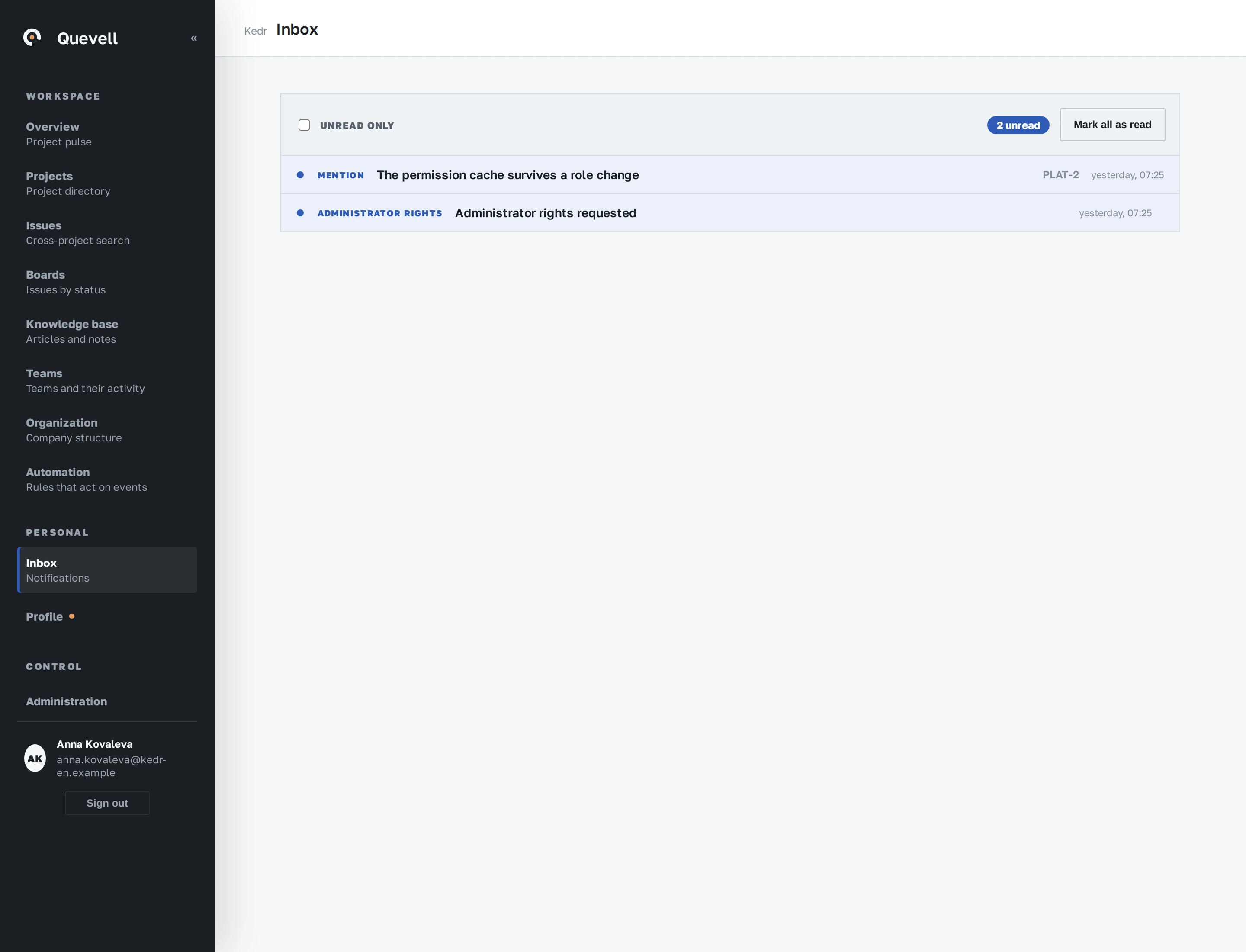
Notifications users don't mute
Rules your company writes decide who hears about what: typed events, recipients by role, narrowing by project, and individual notification opt-outs. Less noise is a feature.
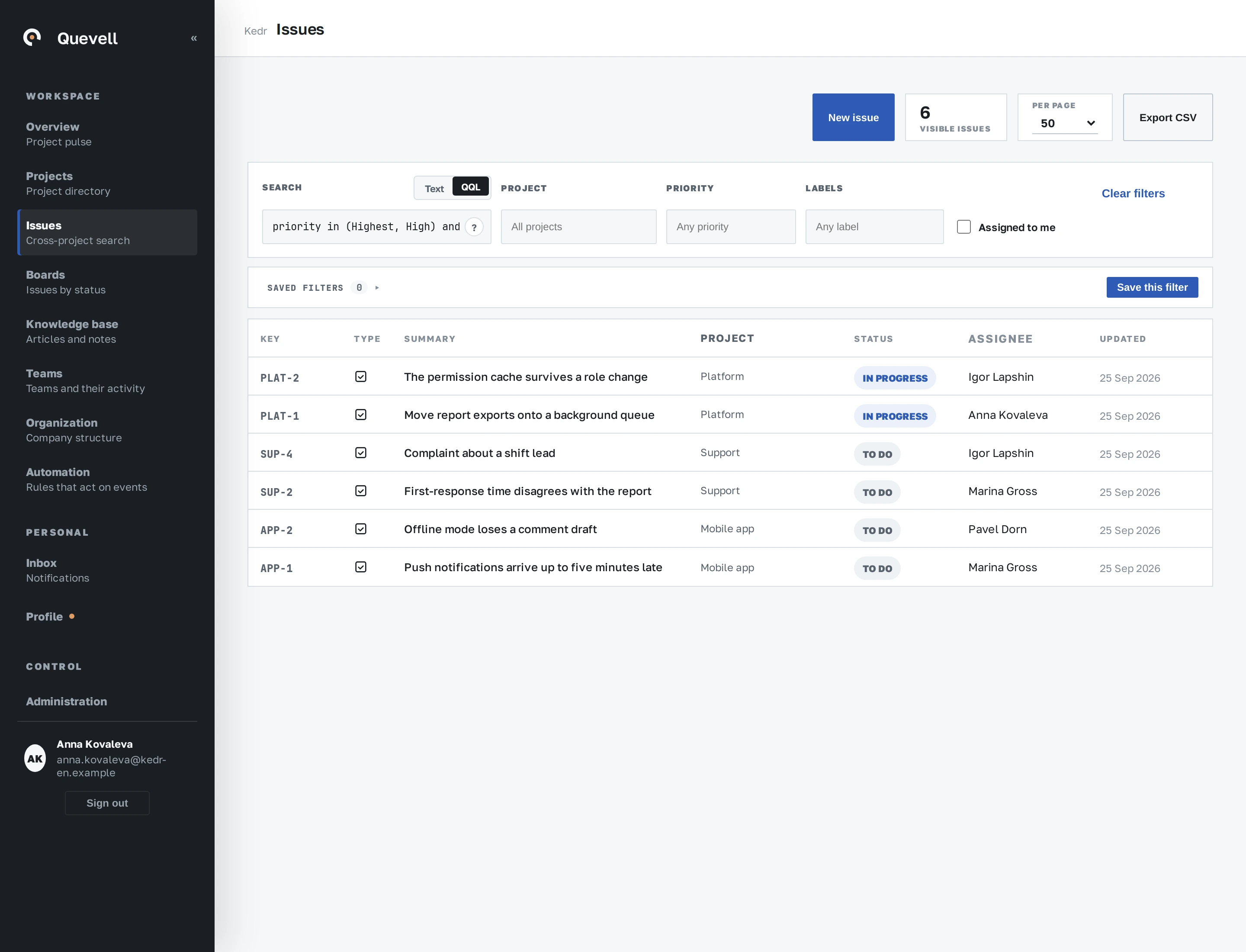
Every day
Rules that explain themselves
Conditions in QQL, schedules, outbound calls. Any rule can be tried on live data with nothing at stake: the check goes through the real engine and rolls back. Every rule can tell you why it fired, and why it did not.
A door for agents, not a side entrance
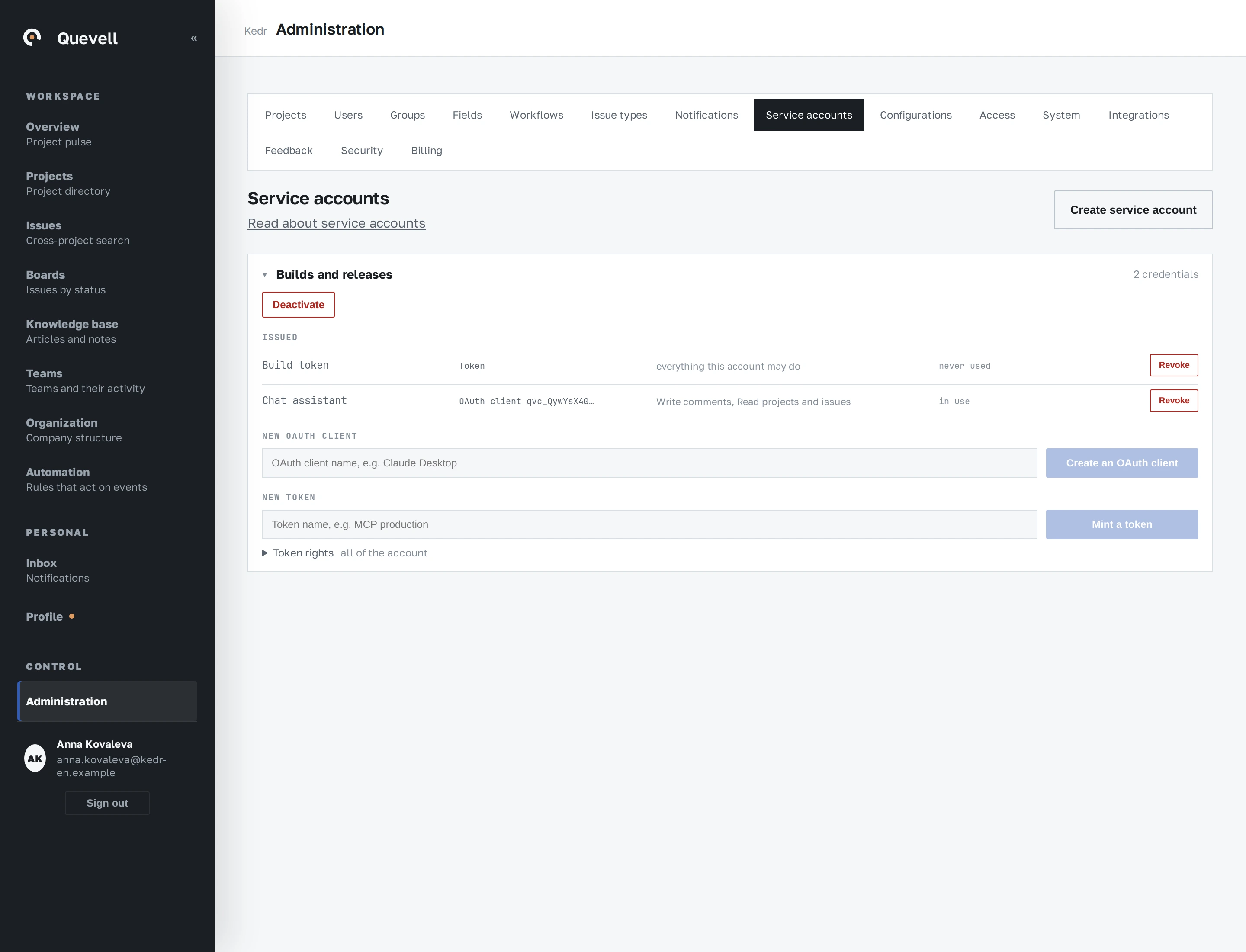
Quevell speaks MCP. An agent sees exactly what a user with the same rights would see, and everything it does lands in the same record as everything the users do.
The whole company at a glance
Who reports to whom, and who is responsible for what: the chart is assembled from user profiles and moves when they do. There is no second structure to maintain, so there is nothing to go stale.
Boards, sprints and time, together
Boards and sprints for teams that work in iterations. Time is logged on the issue itself, with no second tool and nothing to reconcile at month end.
Knowledge next to the work
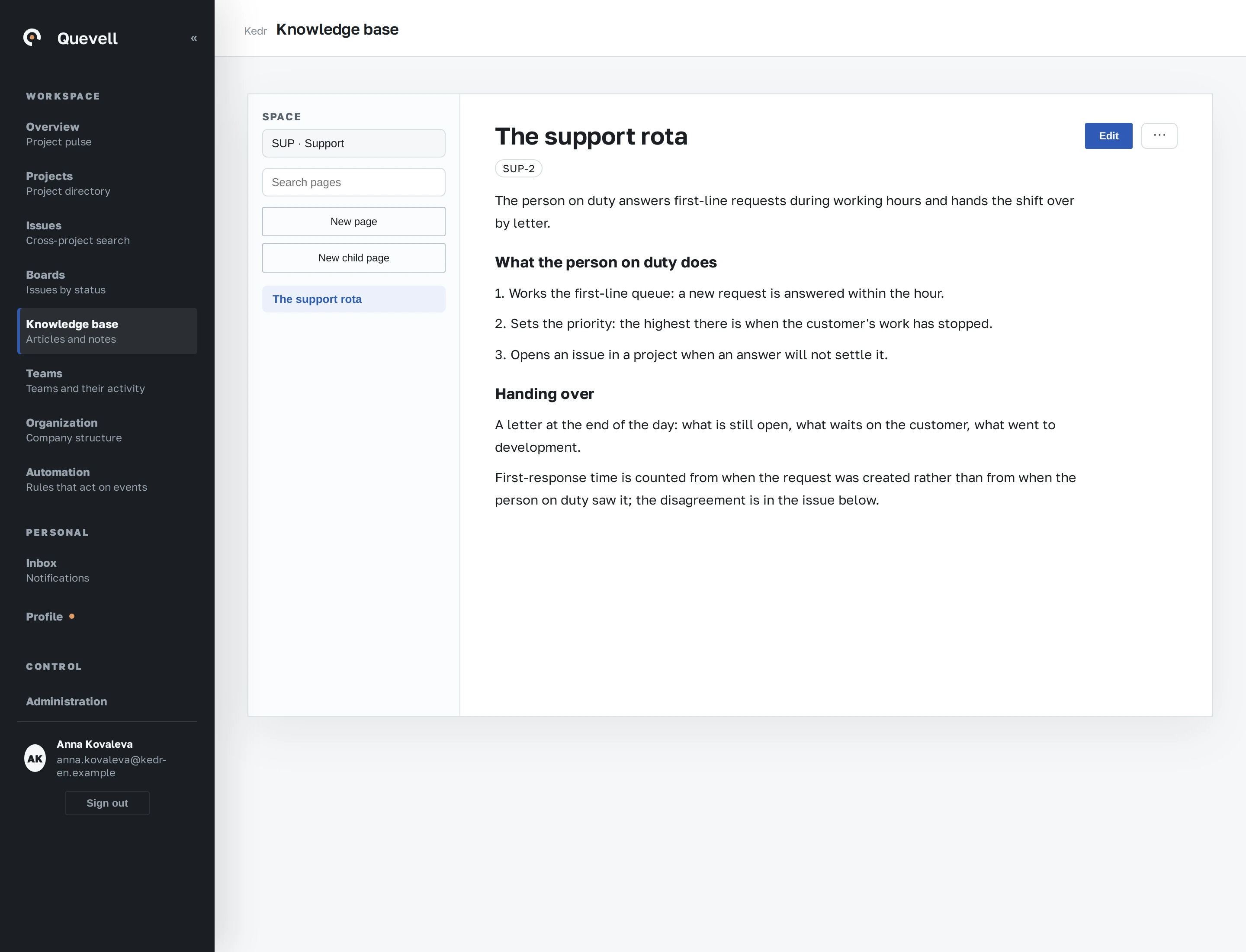
Procedures, decisions and how-tos live in the same product, under the same permissions and the same record of changes. Pages link to issues, and issues link to pages.
Import from one file
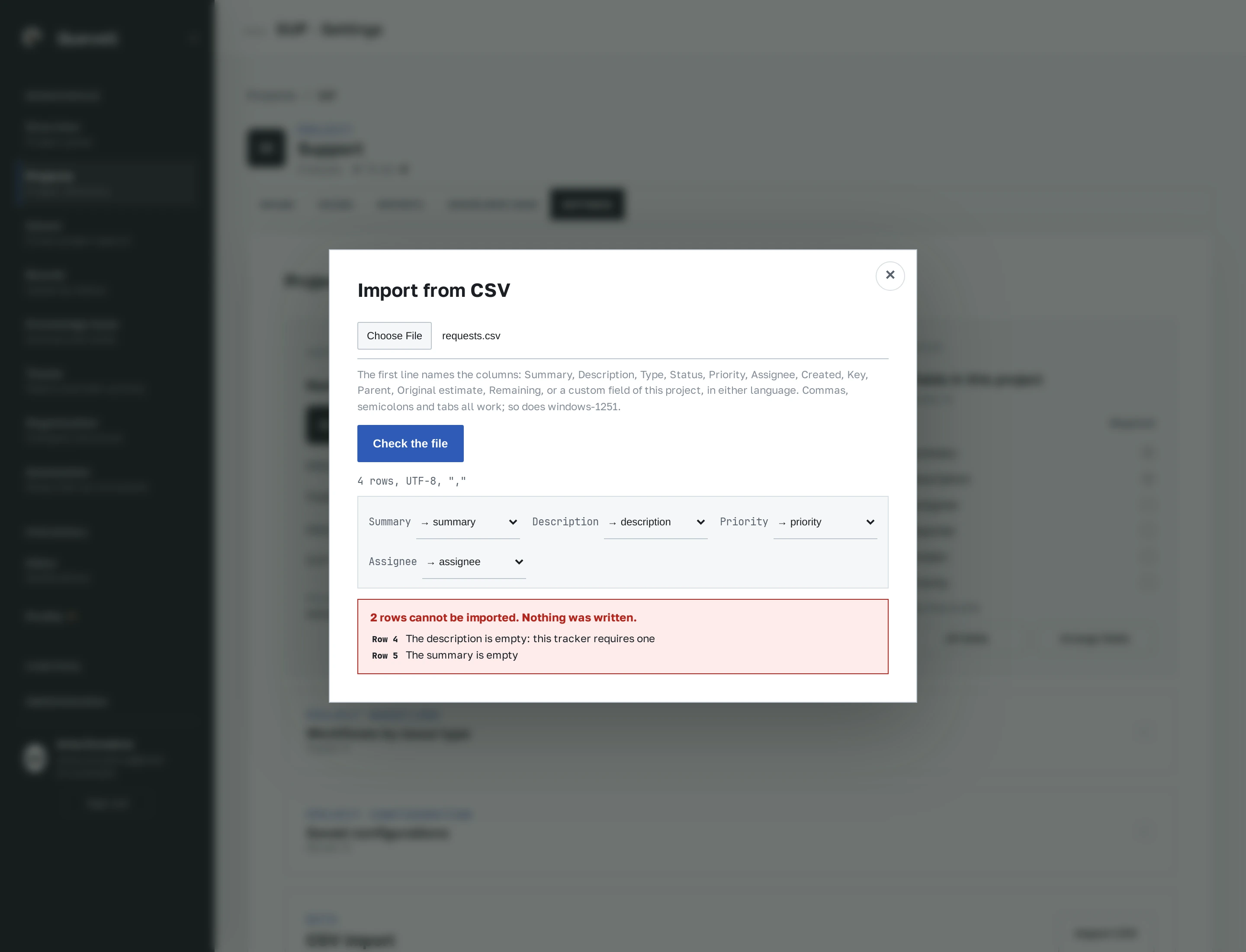
CSV import from any tracker, validated before anything is written. Every problem is on screen before a single issue is created.
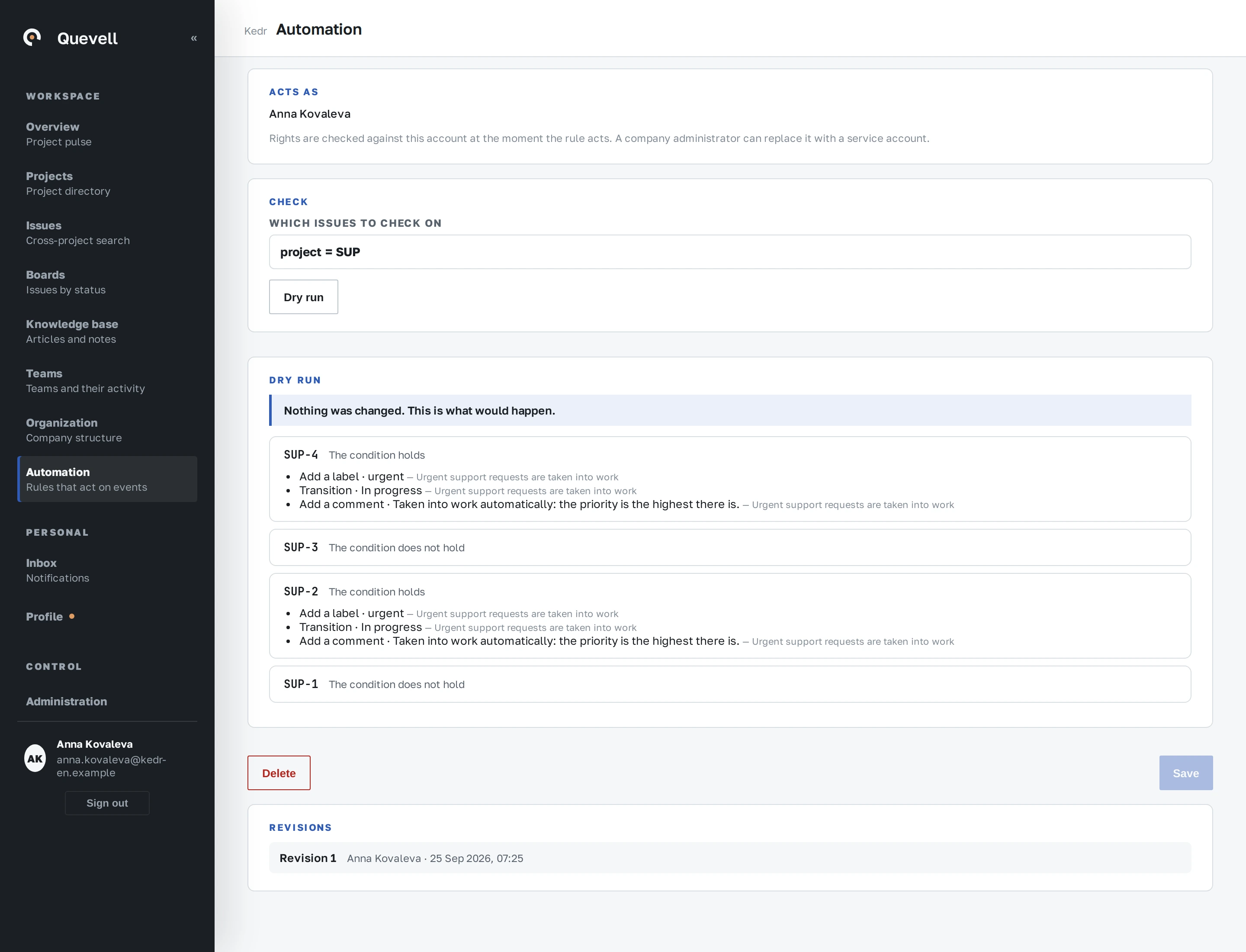
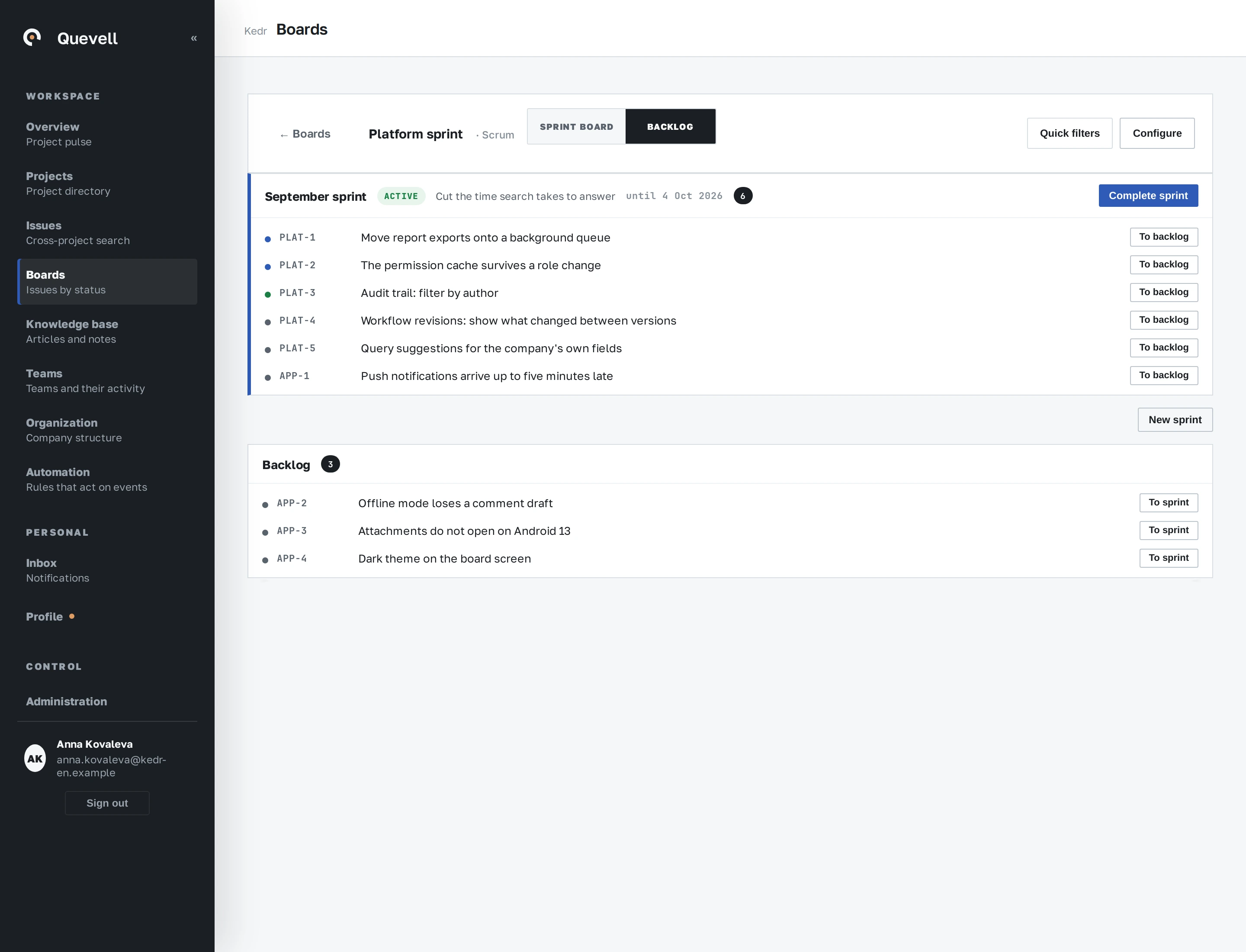
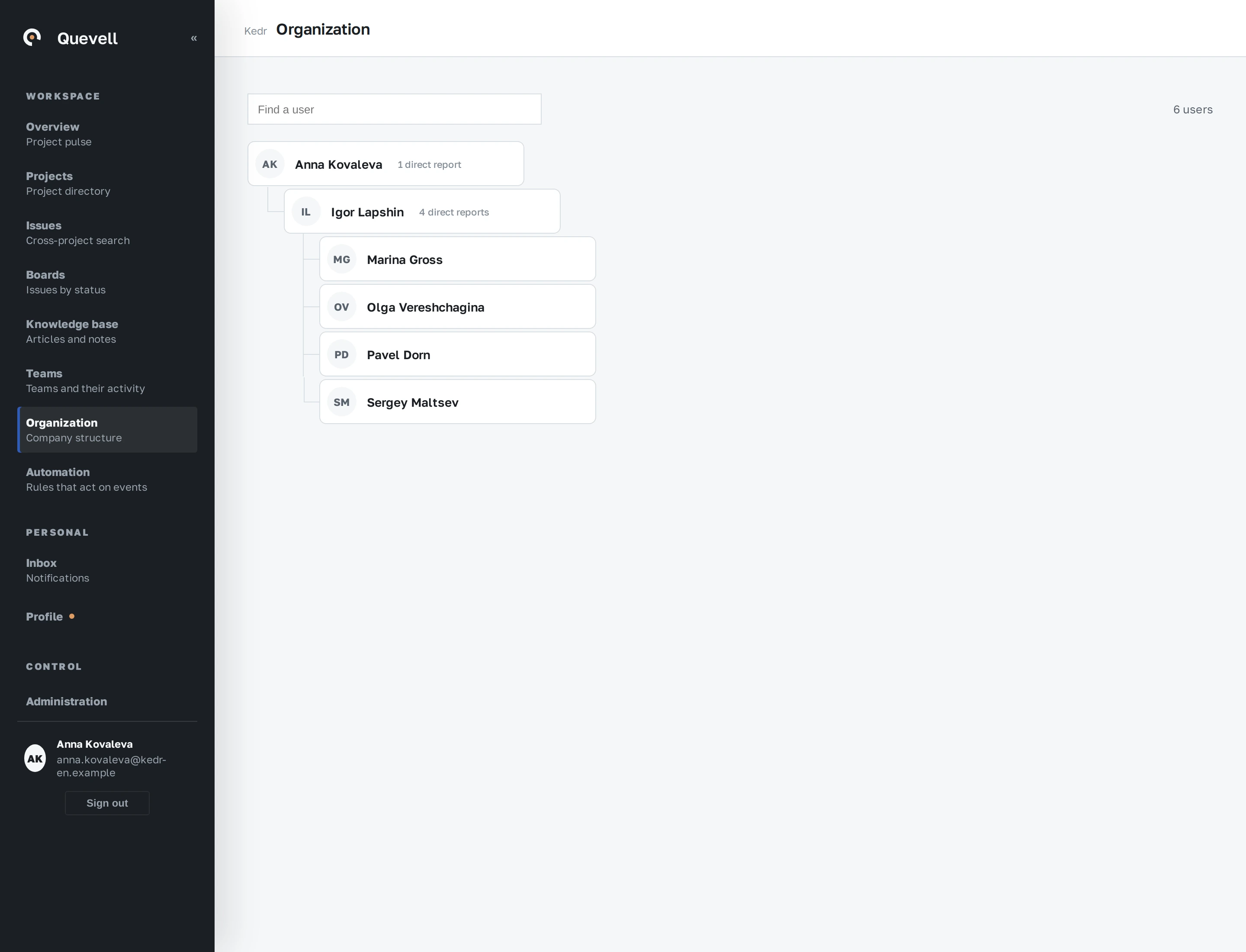
How it all works, in detail: getting started, import, the query language, automation, workflows, rights and access, issue security, the audit trail.
Tell us about your team
Write a few lines about how you work and what you are missing today. The founder reads every email. There is no support tier between you and the people who build this.
hello@quevell.com